
Alright, geeks, it’s time to take your knowledge of the anatomy of a puzzle piece to the next level! At Woods Story, we know you enjoy the moment of the soft click when a piece finally fits. But your “Aha!” isn’t just luck. We call it recognition. Each fragment has its own identity, and once you master the science of it, less guesswork and more strategy become part of the game. Learning the anatomy doesn’t just make you sound like a pro. It actually makes you rock your hobby. What are puzzle pieces called? The parts tucking in and the ones sticking out? Let’s dive in.
The Vocabulary of Connection: Understanding Puzzle Terminology
If you think assembling brainteasers is just a childish routine, you’re wrong. The secret society of true dissectologists (the fans of the assembly process) is full of mysteries, conspiracies, and its own slang only initiated members know. Today, we’ll take the wraps off the mystery of jigsaw puzzle terms and check out some of the most popular puzzle terminology. The latter helps describe the experience of sorting, connecting, and even the frustration of a missing fragment.
Plus, puzzle piece terminology is very practical. Knowing the specific words, you communicate more effectively with fellow addicts enthusiasts, be it asking for advice or describing the beauty of a new die-cut. Finally, knowing the vocabulary helps decode the reviews before the next purchase.
Tabs, Blanks, and Everything In Between

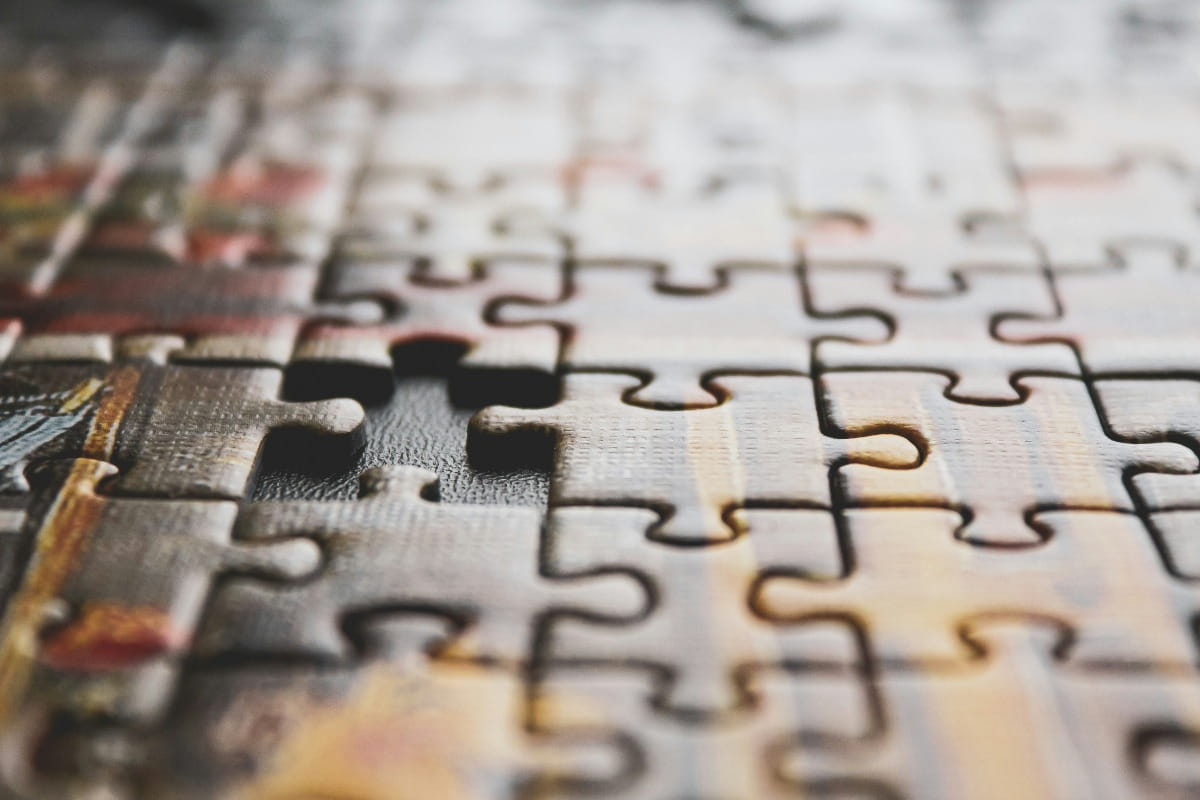
If you look at parts of a puzzle piece with an untrained eye, terms like “innies” and “outies” only exist. But the pros know the words to describe a puzzle piece also include “tabs” and “blanks”:
- Tabs (or knobs). The parts that stick out.
- Blanks (or sockets). The indentations that receive tabs.
See? No need to have a PhD to remember these words. In tandem, they create an interlocking mechanism. Typically, a conventional piece has 4 sides (with either a tab or a blank on each side), so you may hear such puzzle piece name:
- Two-tab, two-blank fragment
- Four-tab element
- Edge piece (one flat side)
Knowing and noticing these patterns helps make sorting easier.
Classifying Jigsaw Puzzle Shapes: From Ribbon Cut to Random Cut
Just like chefs d'œuvres du Louvre have their unique brushworks, brainteasers have different types of puzzle pieces (unique cut designs). But they aren’t only about how the fragments fit, but also about how they move you through the journey. When it comes to the different types of puzzle pieces, here’s a quick and simple explanation:
- Ribbon (grid) cut. If you like predictability, this is your thing. You can easily identify rows and columns, while shapes are uniform. Top choice among amateurs.
- Random. The silhouettes vary. No consistent patterns. Choose random if challenges don’t scare you.
Identifying Special Puzzle Piece Shapes

While All Wooden Puzzles are fun to deal with, it’s their shapes that add cool vibes to the process. Puzzle piece shape names vary wildly, but we’ll check the true stars of the show:
- Whimsies. You can easily recognize these fun silhouettes: people, animals, plants, symbols, themed items, adding playful elements to the brainteaser. Loved by those who love surprises as they engage in a cult-favorite hobby.
- Victorians. Curly and randomly shaped, the fragments have diverse and often intricate silhouettes. The vintage charm makes the brainteasers unpredictable.
- Tessellated. The brainteaser comprises 1-3 repetitive geometric forms (waves, hexagons, or/and angular tiles). They together create an architectural and kind of meditative vibe. Excellent for geeks looking to upgrade their skills.
- False edges. Fragments with a flat edge that don’t fit on the outer border.
- Dancing Man/Little Man. The element with blanks on the sides and a tab at the top (head).
- Swiss cheese with a lot of holes.
The Strategist's Guide: Outer Pieces and Sorting
Every veteran of the battle with brainteasers knows the number-one rule of this “war”: find the edges!
The outer pieces of a jigsaw puzzle are the core of your masterpiece. Now you know the puzzle pieces names and what kind of puzzles are there, so ensure you also get the difference between these two:
- Edge pieces. They have at least one straight side, define the perimeter, and give you a frame of reference for the rest of the build.
- Corner pieces. The “holy grail” of the initial sort. There are only four (well, as a rule), and they feature two straight sides at a 90-degree angle.
Categorizing these parts of a jigsaw during your initial sort is key. By separating the border from the “internals,” you create a structured environment that makes the “heart” much less intimidating.
Conclusion: Why the Anatomy of a Puzzle Piece Matters
Is there a battle of brainteasers ahead? Great! You understand the anatomy of it now, so the whole experience levels up. You don’t just see random fragments scattered all over the table, but recognize puzzle pieces names, edges, ribbons, strategies, and so on.
If you know jigsaw puzzle terminology, you approach your hobby in a pro manner! Knowing all those tabs and blanks sharpens your observation skills and makes each decision more intentional. Next time you get together with fellow hobby addicts, try using your new vocabulary. You might be surprised how much faster (and more satisfying!) the process gets. Enjoy the ride!

FAQ: Is There Another Word for Puzzle Piece?
Yes. If you’re a frequent visitor to Woods Story Blog, you have probably noticed another word for puzzle piece. “Bits,” “tiles,” “elements,” and “units” are just some of the ways to refer to puzzle piece parts. We’ve done some homework on the web, and here’s how you can call your jigsaw puzzle piece next time (according to online users):
- Nub, nubbin, nubbie, or outie.
- Gimmies (they weren’t cut all the way through).
- Misfits/false fits (yes, they seem right but aren’t).
- The “dog bone" has two tabs on opposite sides and two blanks on the others.
- The void. A heartbreaking, empty space at the end of a 1000-piece marathon.
- The snowflake with tabs on four sides
The orphan. A lone fragment of a very distinct color or pattern, but with zero neighbors in sight.


Leave a comment
This site is protected by hCaptcha and the hCaptcha Privacy Policy and Terms of Service apply.