
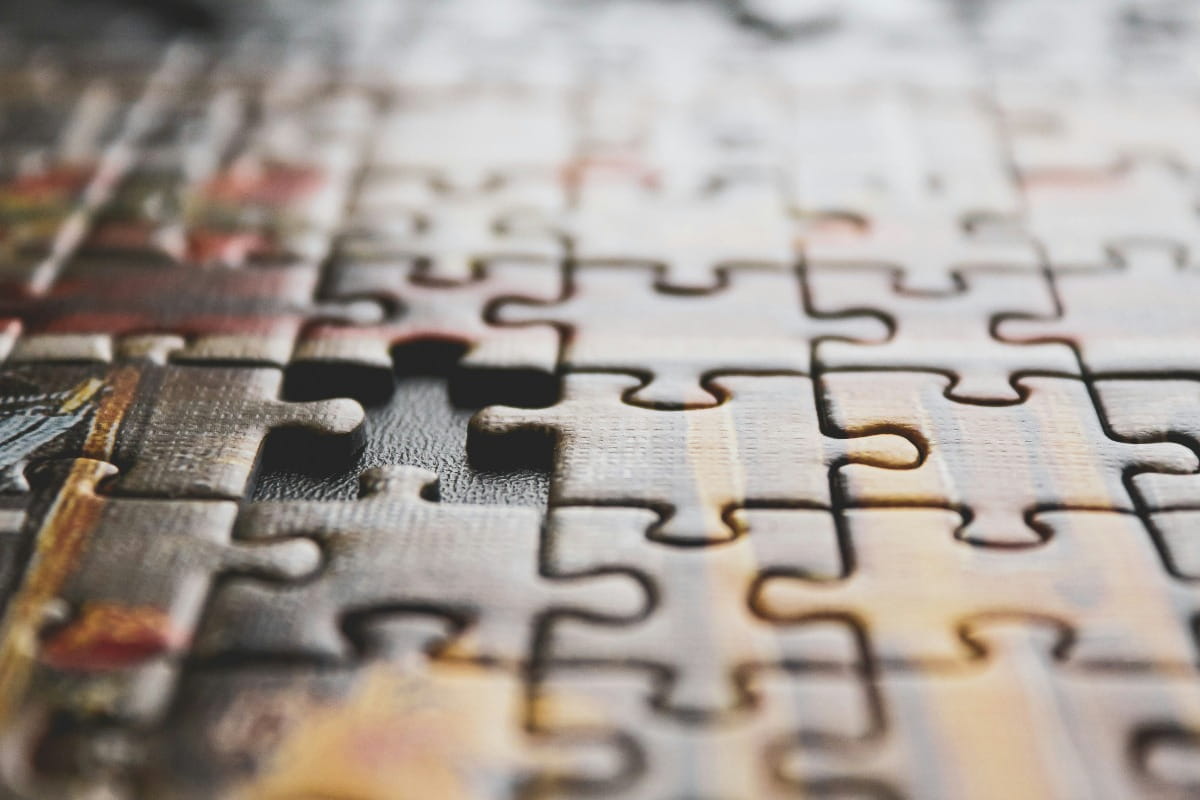
We at Woods Story are jigsaw geeks (and proud of it!). One of those rare hobbies that has quietly stood the test of time makes us curiouser and curiouser about its nature. What kind of puzzles are there? How many types of puzzles are there? What if we haven't tried some yet? These what's and how's make us explore the rich and diverse world of a timeless hobby to discover types of puzzles that go far beyond traditional cardboard brainteasers. So, if you (like us) wonder what type of puzzles are there, the good news: you can find something for your personality, skill level, and interest.
Exploring the Main Puzzle Genres: What Are the Different Types of Puzzles?
There are gazillions of different types of puzzle. However, they're typically categorized into genres based on three main factors:
- Material (cardboard, wood, plastic, digital)
- Dimension (2D/3D)
- Cognitive challenge (visual, linguistic, logical, mechanical)
Knowing every other kind of brainteaser, it'll be easier to navigate the Puzzles for Adults and children available today. While many people start with jigsaws, there are also word, logic, mechanical, and construction-based brainteasers. All these kinds of puzzles tend to engage our brains in a slightly different way. Some sharpen spatial reasoning while others boost vocabulary or problem-solving skills. Knowing the answer to What are the different types of puzzles question, you know what challenge your mind is ready to deal with at the moment.
The Timeless Appeal of Jigsaw Puzzles
Time changes, people change. But jigsaws still top the hit parade of brainteasers. Different kinds of puzzles are out there, but true nerds know which remain the most iconic. Why? At Woods Story Blog, we believe the answer is in a simple yet satisfying premise: assembling scattered fragments into a complete picture, with a satisfying final 'click.' There are many options to explore:
- Standard grid-cut with uniform interlocking pieces.
- Random-cut featuring irregular shapes to double the challenge.
- Panoramic are wide, cinematic images.
- Circular with a twist on the classy rectangular format.
All of them remain popular because they give exactly what both beginners and pro-geeks need: the right complexity level, and the balance between relaxation and challenge.
Unique and Wooden Puzzle Variations
If you ask what a premium puzzle type is, wooden types of puzzles with pictures and non-traditional shapes are the answer. They're durable while their craftsmanship, tactile feel, and creative shapes make them especially appealing to collectors and enthusiasts.
Now you know what types of wooden puzzles are available, so let's check one more factor – the method of cut.
So, what are some unique types of puzzles cuts?
- Ribbon cuts – interlocking tabs and blanks – with fragments arranged in a regular, predictable grid. Every detail is relatively uniform, so the assembly process is straightforward.
- Random cuts with details shaped in unpredictable, irregular patterns.
- Whimsies featuring themed shapes (animals, objects, symbols).
- Irregular-edge without traditional borders.
- Interlockings with pieces snapping together nicely, so they stay in place and are easier to work with.
- Non-interlockings don't hold together as firmly, so they can shift around while you're building them and make things a bit more challenging.
Whether you choose Puzzles for Kids or the adults level, they also double as objets d'art.
Challenging the Mind: Word and Logic Puzzles

Photo by Ross Sneddon from unsplash
Not every brainteaser is about the actual assembly process. Some of them you solve entirely in your mind. The most popular types of word puzzles are (but not limited to!):
- The good old Crosswords. They test vocabulary and general knowledge like no other!
- Word searches based on pattern recognition and focus.
- Rebus with symbols and pictures used to represent words/parts of words.
- Anagrams focused on rearranging letters to form new words
- Optical illusions enable one to enjoy illusions and visual tricks, challenge your perception, so you guess what's in front of you.
Wanna train deductive reasoning and pattern recognition? Make Sudoku or grid-based challenges part of your routine. They're known for extra-strong cognitive benefits, helping boost memory, concentration, and mental agility.
Taking it to the Third Dimension: Types of 3D Puzzles
The whole Woods Story team is a huge fan of various types of 3d puzzles. Why? Well, because you can easily construct them not just horizontally but vertically, too. Wanna build La tour Eiffel or Taj Mahal? Different types of puzzles for adults let you put your engineering skills to the test through building masterpieces of architectural style.
What types of puzzles are recommended for adults? We recommend the most popular options:
- Architectural replicas (famous landmarks like the ones above).
- Mechanical wooden models with moving parts.
- Crystal or plastic 3D builds, when assembled, create gorgeous, sparkling 3D figures, structures, objects, etc.
If you still wonder whether the third dimension is the right place to go, it 100% is if you're into engineering, design, or hands-on problem-solving. The mix of creativity and technical thinking puts them on the list of the best options for advanced hobbyists.
Puzzles for Every Age: From Toddlers to Teens
One of the reasons why various types of puzzles for children are great hobbies is because they are easily adaptable across all age groups. What are the differences between puzzle types? Well, they usually lie in complexity, size, and purpose. Wondering what puzzles are best for kids learning and development? For pumpkins, choose products that help develop fine motor skills, hand-eye coordination, and early problem-solving abilities. As they grow, the hobby shifts toward more complex cognitive challenges.
Early Learning: Puzzles for Toddlers and Preschoolers

Photo by Tara Winstead from Pexels
What types of puzzles are best for toddlers? Simple and safe. Choosing the most suitable kids-level options keep those two parameters in mind, and go for:
- Knobs (large and easy to grip)
- Chunky wooden brainteasers with large, safe pieces.
- Simple shape sorters (so fun and engaging!).
The kinds of brainteasers of preschoolers level are a bit more complex:
- Pegs (wooden boards equipped with shapes featuring small knobs or pegs).
- Basic jigsaws (10–50 pieces)
- Alphabet and numbers (chunky letter matching boards, wooden peg brainteasers, sets combined with animals or shapes).
All of them support early learning while keeping the experience fun so munchkins are happy about their small achievements. Plus, if you order Custom Puzzles, the item becomes more than a useful toy but a personalized gift as well.
Puzzles for Developing Minds: Kids and Beginners
Picking up jigsaws as a hobby is honestly a great move in this social media-obsessed 2026. Of course, you can start with whimsy or Maze Puzzles (that are truly aMAZing!). But we recommend starting small. What kinds of puzzles are good for beginners? Pick all types of puzzles for kids and the ones with no more than 100–300 pieces. Choose images you find engaging, so you'll definitely be interested in assembling. Don't know where to start? Just browse all types of puzzles for children featuring colorful, high-contrast images with distinct sections, like animals, landscapes, or collage styles.
Conclusion: Choosing Your Next Puzzle Adventure

If you thought the puzzle genre was only the classic one, we hope we proved you wrong here. The hobby is far more diverse so there's something to meet all tastes and skills. From conventional jigsaws to intricate wooden chef-d'oeuvres, from words to complex 3D builds, all offer a unique way to engage the minds of kids, adults, and users young at heart. The key? To explore! Try different types of puzzles to find the adventure that is perfect for your personality.

Leave a comment
This site is protected by hCaptcha and the hCaptcha Privacy Policy and Terms of Service apply.